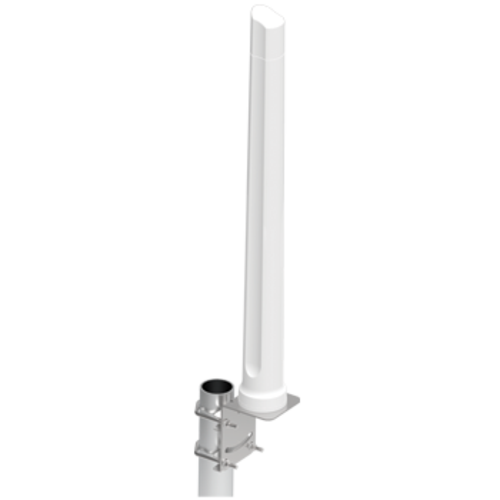
RFI OMNI-293 - Poynting Omni-Directional 5G/LTE Wideband 9dBi Antenna (617-3800MHz)
RFI OMNI-293 - Poynting Omni-Directional 5G/LTE Wideband 9dBi Antenna (617-3800MHz)
Couldn't load pickup availability
## Contact Us Directly Here for Quantity Discount Pricing ##
RFI OMNI-293 - Poynting Omni-Directional Wideband 5G/LTE 9dBi Antenna (617-3800MHz) N Type Female Termination
The Poynting OMNI-293: One Antenna for Today's and Tomorrow's Cellular Needs
The OMNI-293 is a top-of-the-line antenna that gets great signal in all directions (omni-directional) for a wide range of cellular frequencies. It works with everything from current 4G/LTE all the way up to future 5G technologies. This antenna delivers consistent performance across a very broad frequency range (617 to 3800 MHz) with a maximum gain of 9 dBi.
Here's what makes the OMNI-293 future-proof:
- It covers the new 617 to 698 MHz band, which is becoming increasingly important.
- It also picks up frequencies in the 3400 to 3800 MHz range, which will be used for future 5G applications.
This wide range of compatibility makes the OMNI-293 a reliable choice for almost anywhere in the world, ensuring strong signal reception in both urban and rural areas. The antenna's design also ensures excellent signal quality across all frequencies.
Ready for the Future of Mobile Data (5G) and More
This antenna is built to handle a wide range of frequencies, which is crucial for getting the best reception with current LTE technologies and future 5G. These technologies combine multiple frequency bands (Carrier Aggregation) to boost speed and reception. The antenna connects easily to various cables using its N-Type female connector.
Key benefits:
- Picks up signal well in all directions (omni-directional) with high gain.
- Works with new 5G bands (3.5 GHz) and a band important for future technologies (617-698 MHz).
- Wideband design ensures compatibility with future advancements.
- Built to last outdoors in both cities and rural areas (weather resistant, IP65 rated).
Ideal for:
- Strengthening data connections and making them more reliable.
- Machine-to-machine (M2M) communication and Internet of Things (IoT) applications.
- High-performance industrial routers.
- Areas with weak signal.
- Boosting 4G/LTE and future 5G reception.
Click Here to View the Brochure
Share